



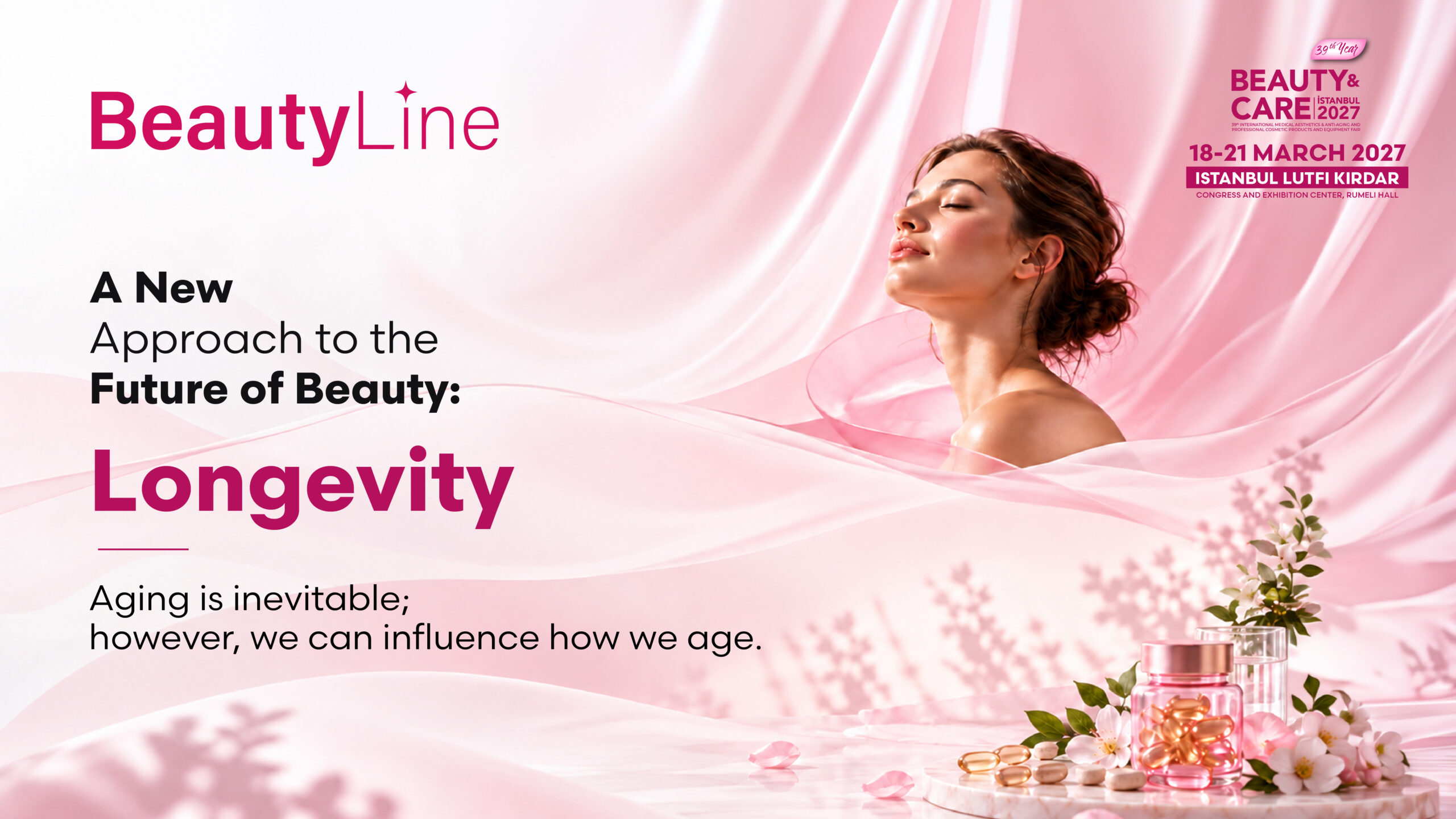
A New Approach to the Future of Beauty: Longevity
Longevity has become one of the most widely discussed concepts in the health, wellness, nutrition, fitness and beauty industries in recent years. However, longevity does not simply mean “living longer.” The current scientific approach focuses not only on extending lifespan, but also on increasing the number of years lived in good health — in other words, healthspan.
From nutrition and physical activity to sleep quality, stress management, preventive health practices and biological age research, many different areas are considered part of the longevity approach.
The Science of Healthy Aging and a Practical Guide to Longevity
So, what exactly is longevity? How is biological age measured? Which longevity tests are actually meaningful? Which supplements are supported by scientific evidence? And what steps can be taken today to age in a healthier way?
What Does Longevity Mean? The Difference Between Lifespan and Healthspan
Longevity generally refers to the concept of long life and extending lifespan. However, from the perspective of modern gerontology, the goal is not simply to extend lifespan, meaning total years of life, but to ensure that as much of a person’s life as possible is spent in good health and with independence.
Two concepts are particularly important here:
Lifespan: The total length of a person’s life.
Healthspan: The length of life spent in good health, with physical activity and functional capacity.
The National Institute on Aging (NIA) states that one of the key goals of aging research is to increase healthspan and delay, as much as possible, the onset or impact of age-related diseases.
For this reason, the longevity approach is centered not only on the question, “How many years will I live?”, but also on “How many of those years will I spend in good health and with independence?”
The Difference Between Longevity and Anti-Aging
Although the terms anti-aging and longevity are often used interchangeably, they do not mean the same thing.
Anti-aging generally refers to approaches aimed at reducing the visible or biological signs of aging. It has a broad range of applications, from skincare to aesthetic procedures.
Longevity, on the other hand, addresses the biology of the aging process and age-related loss of health from a broader perspective. It considers areas such as nutrition, exercise, sleep, metabolic health, cardiovascular fitness, social connections and preventive health as interconnected elements.
In this sense, the longevity approach offers a healthy aging perspective that extends beyond anti-aging.
The Longevity Approach in Preventive Health
An important component of the longevity approach is the concept of preventive health.
The aim is not to intervene only after a disease has developed, but to identify risk factors at an early stage, improve lifestyle habits and, when necessary, plan appropriate screenings and health checks with healthcare professionals.
According to the NIA, changes associated with biological aging may appear years before age-related diseases become clinically apparent. For this reason, research into biological age and aging biomarkers represents an important scientific field for understanding risks at an early stage.
However, an important distinction must be made here: a longevity check-up is not a single test that replaces standard health screenings. It should be evaluated by a physician based on the individual’s age, family history, risk factors and current health status.
What Is Biological Age and How Does It Differ from Chronological Age?
Chronological age refers to the number of years that have passed since a person’s birth.
Biological age, on the other hand, is a concept that attempts to estimate the extent to which the cellular, molecular and physiological characteristics of an organism show changes associated with aging.
Two people may have the same chronological age while differing in their health status, physical capacity, metabolic characteristics or certain biological markers.
The NIA notes that chronological age and biological age do not always correspond and that numerous “aging clocks” have been developed using DNA changes, proteins and different types of molecular data to estimate biological age.
How Is Biological Age Measured?
There is currently no single, universally accepted method for measuring biological age.
Research studies and some commercial tests may use different parameters, including:
- DNA methylation,
- Blood proteins,
- Metabolic markers,
- Physical performance,
- Cardiovascular fitness,
- Body composition.
In particular, epigenetic clocks attempt to estimate biological age based on changes in DNA methylation.
Research supported by the NIA indicates that DNA methylation-based estimates of biological age may be associated with certain age-related health outcomes and mortality. However, it is also important to emphasize that biological age alone is not a test that can definitively predict a person’s future health status.
Simple Biological Age Indicators That Can Be Tracked at Home
Measurements taken at home cannot determine biological age with certainty. However, they may provide insight into certain functional indicators that can be monitored as part of healthy aging.
These may include:
- Resting heart rate,
- Level of physical activity,
- Walking or exercise capacity,
- Muscle strength,
- Balance,
- Changes in waist circumference and body composition,
- Sleep duration and regularity.
In particular, cardiorespiratory fitness is an important indicator of health. The American Heart Association states that cardiorespiratory fitness is an independent risk indicator for cardiovascular and all-cause mortality.
The goal here should not be to “calculate biological age at home,” but rather to track changes in functional capacity over time.
What Are Longevity Tests?
Longevity testing does not consist of one standardized test. The assessments used may vary depending on an individual’s health status, age and clinical needs.
Blood Tests and Biomarkers
Blood tests are an important tool for assessing overall health. From a longevity perspective, depending on the individual’s circumstances, relevant parameters may include:
- Blood glucose and HbA1c,
- Lipid profile,
- Blood pressure,
- Kidney and liver function,
- Nutrition-related markers such as iron and vitamin B12,
- Certain markers associated with inflammation.
However, it is important to note that there is no standardized panel applicable to everyone under the name “longevity blood test.”
Biomarkers are indicators that can measure different conditions, ranging from normal biological processes to disease processes or responses to an intervention. The NIA states that biomarkers play an important role in areas such as early disease detection, diagnosis and monitoring.
Epigenetic Age (DNA Methylation) and Telomere Testing
Epigenetic age tests analyze changes such as DNA methylation, which can affect how genes function without altering the DNA sequence itself.
The “epigenetic age” generated by these tests may be higher or lower than a person’s chronological age. However, the result should not be interpreted on its own as meaning that someone is “aging faster” or “aging more slowly.”
Telomere tests attempt to measure the length of telomeres, which are located at the ends of chromosomes. Although telomeres are an important biological marker in cellular aging research, telomere length alone is not a definitive measure of biological age or overall health. NIA sources note that telomere length reflects only certain aspects of aging and that measurement methods can affect the results.
Who Should Consider a Longevity Check-Up?
A longevity check-up should not be considered a standardized health package consisting of the same list of tests for everyone.
People with a family history of chronic diseases occurring at an early age, metabolic risk factors, an interest in systematically assessing their lifestyle, or a desire to evaluate their current health more comprehensively may consult a physician to determine which assessments are appropriate for them.
The key principle here should be not having more tests, but connecting the right tests to the right clinical question.
5 Key Areas for Healthy Aging
From a scientific perspective, one of the strongest messages in longevity research is that rather than relying on a single “miracle” intervention, multiple lifestyle factors should be considered together.
A systematic review and meta-analysis published in 2025 evaluated numerous randomized controlled trials addressing nutrition, physical activity, mental health, social connections and preventive health practices together.
The findings suggest that multi-component lifestyle approaches may support healthy aging.
Longevity Nutrition: Mediterranean-Style Eating, Protein and Fiber
Longevity nutrition does not refer to a single “longevity diet.”
One of the most extensively researched approaches in the scientific literature is the Mediterranean-style diet. This dietary pattern includes vegetables, fruits, legumes, whole grains, olive oil, fish, nuts and other nutrient-dense foods, and has been associated with long-term health outcomes.
A systematic review and meta-analysis published in 2024 reported that greater adherence to a Mediterranean-style diet was associated with lower risks of all-cause mortality and cardiovascular mortality among older adults.
Protein is particularly important for maintaining muscle mass as people age. Vegetables, fruits, legumes and whole grains rich in fiber are also important components of a high-quality diet.
The key is not to search for individual “longevity foods,” but to build an adequate and balanced dietary pattern.
Exercise: Muscle Mass and VO₂max
In the longevity approach, exercise is important not only for weight management but also for maintaining functional capacity.
Resistance exercise helps maintain muscle mass and strength, while aerobic exercise contributes to improving cardiorespiratory fitness.
VO₂max refers to the maximum amount of oxygen the body can use during exercise and is an important indicator of cardiorespiratory fitness. The American Heart Association states that cardiorespiratory fitness is strongly associated with health outcomes.
Therefore, longevity-focused exercise is not simply about “moving more”; it means maintaining muscle strength, endurance, balance, mobility and cardiorespiratory capacity together.
Sleep and Stress Management
Sleep is one of the components of healthy aging that should not be overlooked.
Regular and sufficient sleep is important for metabolic health, cognitive function, mental well-being and daily performance.
Stress management is similarly considered part of the longevity approach. Research cited by the NIA indicates that certain forms of stress may be associated with temporary changes in biological age markers and that some of these markers may partially improve when the stress is resolved.
For this reason, sleep and stress management are fundamental elements of a longevity plan, even if they receive less attention than supplements.
Intermittent Fasting and Autophagy
Intermittent fasting is one of the most widely discussed dietary approaches in the longevity field.
Changes in energy metabolism during fasting and the potential effects on autophagy, a cellular process, are among the mechanisms that have attracted particular research interest.
However, it is important to distinguish between mechanisms observed in laboratory and animal studies and clinical evidence demonstrating that human lifespan is actually extended.
A 2026 review reported that intermittent fasting may have beneficial effects on metabolic and certain cellular processes, but also noted inconsistencies in study findings and methodological limitations.
Therefore, intermittent fasting should not be regarded as a proven “life-extension treatment” and should instead be evaluated in consideration of an individual’s health status and nutritional needs.
Social Connections and Blue Zones
Longevity is not limited to biology and nutrition.
Social relationships, a sense of community, daily movement and a sense of purpose are also receiving increasing attention in healthy aging research.
Blue Zones is a term used to describe certain regions with high concentrations of people who live to advanced ages. Regions such as Okinawa, Ikaria, Sardinia and Nicoya are among the areas at the center of this research.
However, it would not be accurate to interpret the Blue Zones narrative as meaning that “a single diet or lifestyle guarantees longevity.” The scientific literature cautions against reducing the reasons for longevity in these regions to a single factor.
A more cautious takeaway is to consider mobility, social connections, dietary patterns and lifestyle as a whole.
Longevity Supplements: What Has Evidence and What Does Not?
Supplements are among the fastest-growing areas of the longevity industry.
Compounds such as NAD+, NMN, resveratrol, omega-3, vitamin D and CoQ10 are frequently discussed in the context of “healthy aging” and longevity.
However, popularity and clinical evidence are not the same thing.
NAD+, NMN and Resveratrol
NAD+ is an important molecule involved in cellular energy metabolism and various biological processes. Changes in NAD+ metabolism with age are among the subjects of longevity research.
Human studies on NMN and other NAD+ precursors are available. However, a comprehensive systematic review published in 2026 reported that NMN and NR may increase NAD-related biochemical markers in humans, while clinical efficacy in terms of healthspan or anti-aging outcomes remains unestablished.
Resveratrol has also been studied extensively in longevity research for many years. However, systematic reviews evaluating human studies indicate that there is no definitive clinical evidence supporting its routine use for any specific health purpose.
Therefore, the most accurate description of these compounds is “promising areas of research,” rather than “proven life-extending supplements.”
Omega-3, Vitamin D and Coenzyme Q10
Omega-3 fatty acids, vitamin D and CoQ10 frequently appear in longevity-related content. However, each should be evaluated for different purposes and according to different levels of evidence.
For example, treating vitamin D deficiency is not the same as using high-dose vitamin D in healthy individuals with the aim of extending lifespan. NIH data on vitamin D indicate that the effects of supplementation on certain outcomes may vary depending on a person’s baseline levels and health status.
Therefore, the fundamental principle of longevity supplementation should not be “more supplements = longer life.”
What to Know Before Taking Supplements
The fact that a supplement is natural does not mean that it is safe or necessary for everyone.
Supplement use should be evaluated together with:
- The individual’s current health status,
- Medications being taken,
- Dietary pattern,
- Laboratory results,
- Age and lifestyle.
It is particularly important to consult a healthcare professional when considering high doses or the combined use of multiple supplements.
The foundation of longevity is lifestyle and preventive health, not supplements.
How to Create a Personal Longevity Plan
A longevity plan should not be the same for everyone.
While one person may prioritize increasing muscle mass, another may focus on improving sleep, metabolic health, cardiorespiratory fitness or dietary quality.
Step by Step: Measure, Implement, Monitor
- Measure
First, the current situation is assessed. An individual’s health history, family history, lifestyle, physical capacity and health indicators considered necessary by a physician may be evaluated.
- Prioritize
Rather than trying to change everything at once, several key areas are identified. Nutrition, movement, sleep and stress management generally form the core components of a lifestyle plan.
- Implement
Realistic and sustainable habits are established. Instead of highly restrictive diets or short-term “biohacking” practices, behaviors that can be maintained over the long term should be prioritized.
- Monitor
The defined goals are reviewed at regular intervals. Physical performance, sleep, dietary habits and relevant health indicators can be reassessed over time.
- Seek Professional Support When Necessary
Particularly when an existing medical condition, regular medication use or a significant health risk is involved, a longevity plan should be developed together with a healthcare professional.
Because one of the most important principles of longevity is this:
No single test, supplement or dietary pattern can guarantee a long and healthy life.
Frequently Asked Questions About Longevity
What is longevity treatment?
Longevity is not the name of a specific treatment. It is an approach that aims to support healthy aging and healthspan by addressing lifestyle, preventive health, nutrition, physical activity and, when necessary, medical assessments together.
There is currently no single longevity treatment proven to stop aging or definitively extend human lifespan.
Can biological age be reversed?
Biological age is an estimate that can vary depending on the measurement method used. Some research indicates that factors such as stress may be associated with temporary changes in certain biological age markers and that these changes may be partially reversible. However, this does not mean that a person’s “actual age” can be reversed.
Therefore, biological age results should not be interpreted on their own as definitive indicators of health or lifespan.
At What Age Should You Start Focusing on Longevity?
There is no specific age at which to start focusing on longevity. Healthy eating, regular physical activity, sufficient sleep, avoiding smoking, stress management and preventive health are important at different stages of life.
The goal is not to “start taking longevity supplements at an early age,” but to establish healthy lifestyle habits as early as possible and maintain them sustainably.
Longevity Is an Approach, Not a Single Test
Although longevity is one of the fastest-developing areas in today’s health and wellness landscape, the popularity of the concept does not mean that every longevity practice has been scientifically proven.
At present, the areas with the strongest scientific evidence include fundamental lifestyle factors such as regular physical activity, cardiorespiratory fitness, maintaining muscle strength, a balanced diet, sufficient sleep, social connections and preventive health.
By contrast, NAD+, NMN, resveratrol, epigenetic clocks and various biohacking practices remain active areas of research.
Therefore, the future of longevity is not simply about “living longer,” but about being able to live healthily, actively and independently for longer.
As the boundaries between beauty, wellness and healthy aging continue to converge, longevity remains one of the key areas shaping the future of the industry.
The New Curiosity of a New Era: Longevity Takes Center Stage at 39th Beauty & Care İstanbul
Closely following global trends in the beauty and personal care industry, 39th Beauty & Care İstanbul continues to make space for emerging approaches shaping the future of the industry.
A new era is beginning for the future of beauty — healthier, more personalized and more holistic.
In this context, Longevity | Special Section brings together the healthy aging and longevity approach with preventive health, wellness, functional nutrition, medical aesthetics, biotechnology and personalized lifestyle solutions.
Taking place on 18–21 March 2027 at İstanbul Lütfi Kırdar International Convention and Exhibition Center, Rumeli Hall, 39th Beauty & Care İstanbul serves as a meeting point for professionals seeking to closely follow the trends shaping the present and future of the beauty industry.